What the Story of UNO Can Teach You If You Dream of Creating Your Own Game
Articulo en Español
If you're working on your first card game, I'd like to tell you a story that might make you see everything from a different perspective.
Not because it's the story of one of the best-selling card games in the world, but because it proves that great ideas don't always come from a multinational company or the studio of a famous game designer. Sometimes they come from the most unexpected places.
A Simple Problem That Changed Everything.
In this case, it all started in a small barbershop in Ohio.
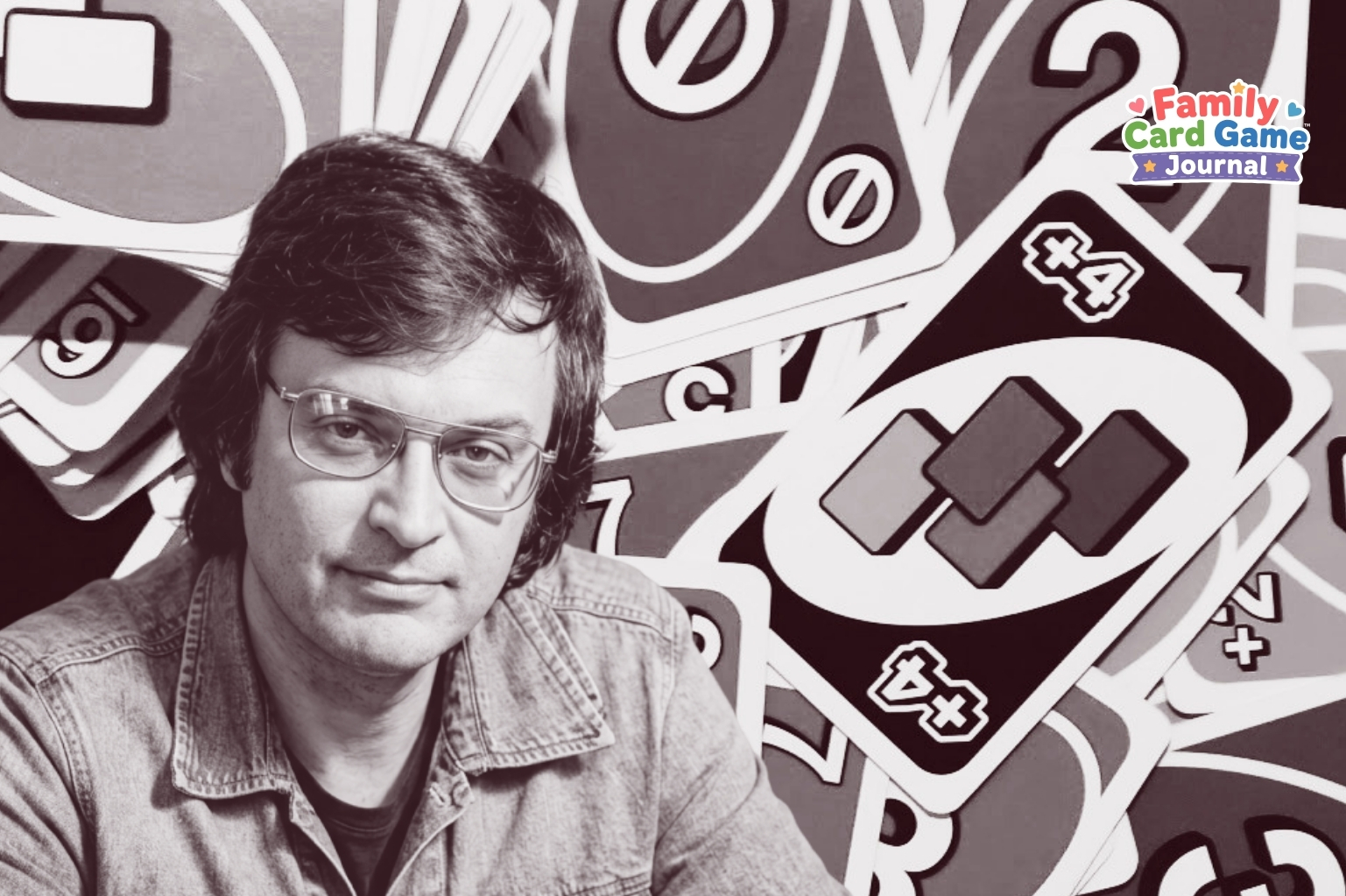
The owner was Merle Robbins. He had no experience in the game industry. He wasn't an inventor, didn't have investors, and didn't know anyone inside the major toy companies. He was simply a man who loved playing card games with his family.
One evening, while playing Crazy Eights, something happened that you've probably experienced yourself: no one could agree on the rules. Like so many family game nights, the game ended with disagreements and different interpretations of how it was supposed to be played.
Most people would have let it go. Merle didn't.
Instead of accepting the problem, he decided to solve it. He believed that if the rules were simpler and the gameplay clearer, anyone could enjoy the game from the very first round.
That's how UNO was born.
But having a great idea was only the beginning. The real challenge was finding someone willing to believe in it. When no one did, Merle decided to believe in it himself.
Together with his family, he mortgaged their home to print the first 5,000 decks. At first glance, it may sound like a reckless gamble, but it was actually a smart business decision. He didn't print hundreds of thousands of copies hoping the market would respond. He produced only enough to find out whether people actually wanted to play.
Building Success One Game at a Time.
Then he did something I believe every game designer should remember. He didn't wait for a big company to discover his game. He went out and sold it himself.
He sold it in his barbershop, his friends helped spread the word, local stores began carrying it, and eventually he and his wife bought an old car and a trailer with signs that read, "America's Best Card Game." They traveled to parks, fairs, and campgrounds, demonstrating the game and selling it directly to people.
He didn't need a massive advertising campaign. He only needed to get people around a table. Because once someone played a game, they immediately understood why it was special.
It's funny to think that today we dream of one of our games going viral on TikTok. More than fifty years ago, Merle was creating that same effect, one game at a time.
Eventually, UNO caught the attention of others. One of them was Bob Tezak, a businessman who, interestingly enough, wasn't part of the toy industry either. He owned a funeral home. Yes, you read that correctly.
Yet Bob had the vision to recognize that this small card game had the potential to reach millions of homes.
At the same time, Merle realized something equally important: creating a great game and building a company capable of distributing it around the world are two completely different challenges. That's why he sold the rights to UNO for $50,000 plus a royalty on every game sold.
Many people believe he gave up a fortune. I prefer to think he understood exactly what his real dream was. His goal was never to become the owner of the world's biggest game company. His dream was to create a game that people would truly enjoy.
Years later, Mattel acquired the company that owned UNO, and the small game that began around a family table became one of the most famous card games of all time.
Where Great Games Really Begin.
But honestly, that's not the part of the story that inspires me the most.
What inspires me happened long before the millions of copies sold. It happened the day a barber looked at a problem everyone else accepted as normal and decided to create a solution.
That's where great games begin. Not with money, connections, or a big company behind them. They begin when someone decides to turn an idea into reality.
If you're creating your first game today, you probably have doubts. Maybe only your family or a few friends have played it. Maybe you've even wondered whether it's worth continuing to invest your time and energy into it. My answer is yes.
Because every game we admire today started exactly the same way: as a simple prototype on a table. The difference is that their creators kept going long before success was guaranteed.
So keep designing. Keep playtesting. Listen to your players. Improve every little detail. And above all, never let anyone convince you that your dream is too small.
You never know if the game you're working on today will someday inspire the next generation of game creators.
Because every great story begins the same way: with an idea and the decision to make it real.
The Philosophy Behind Kawaii Lab Games.
That is exactly the philosophy we live by at Kawaii Lab Games.
We don't create games because success is guaranteed. We create them because it's what we love most. We believe in the power of bringing families together around a table, creating laughter, building memories, and giving people moments they'll remember long after the game is over.
We believe that one day one of our games will open the door for millions of people to discover the entire world we're building. But until that day comes, we'll keep doing exactly what Merle Robbins did more than fifty years ago: creating, testing, improving, and sharing our games with the same excitement we had on day one.
Because great success doesn't begin when the world believes in your idea.
It begins much earlier, the moment you decide not to stop believing in it.
Because the best vacations aren't always the most expensive ones. More often than not, they're simply the ones where we spend more time together.
Remember: the most meaningful experiences are often the simplest ones. So grab a deck of cards, gather your loved ones, and enjoy every round together.
See you in the next game!
Daniel López de Medrano III
The Card Game Maker
Disclaimer: UNO® is a registered trademark of Mattel, Inc. This article is provided for informational and educational purposes only. Kawaii Lab Games is not affiliated with, associated with, sponsored by, or endorsed by Mattel, Inc. All trademarks are the property of their respective owners.